Why some wax turns stiff and flaky
Not every mustache wax behaves the same once it touches your hair. Some formulas go on smooth and stay flexible, while others harden too fast, leave white flakes, or create a crunchy finish that looks unnatural. In many cases, the problem is not only the wax itself, but also how to use mustache wax in the right amount and at the right temperature. A very firm product, especially an extra strong formula, can dry stiff if it is scooped cold and pressed into the mustache without softening first.
Environment matters too. Cold rooms make wax set faster, and dry hairs can cause the product to sit on top instead of coating each strand evenly. When that happens, the wax breaks apart as you move your lip, talk, or comb your mustache. That is when you see clumps, crumbs, and flaky bits near the center of the mustache.
If you are chasing a controlled shape, remember that strong hold mustache wax is meant to lock in structure, not to be overloaded. Too much product creates buildup instead of hold.
Warm wax, clean hair, and a small amount usually give better mustache styling results than applying a large cold lump all at once
To avoid stiffness and flakes, focus on a few basics:
-
Start with a clean, fully dry mustache
-
Use a tiny amount first, then build only if needed
-
Warm the wax before application
-
Comb through to spread product from root to tip
-
Match the wax strength to your style and hair thickness
When these steps line up, even a firm wax can look neat, natural, and controlled rather than brittle or messy.
How to warm mustache wax properly
If you want better control with less pulling, warming the wax is the step that changes everything. Firm waxes, especially strong hold mustache wax, are designed to resist movement. That is great for shaping handlebars or taming stubborn hairs, but it also means the product needs a little heat before it spreads properly. Applying it cold often leads to uneven chunks that sit on the surface instead of blending into the mustache.
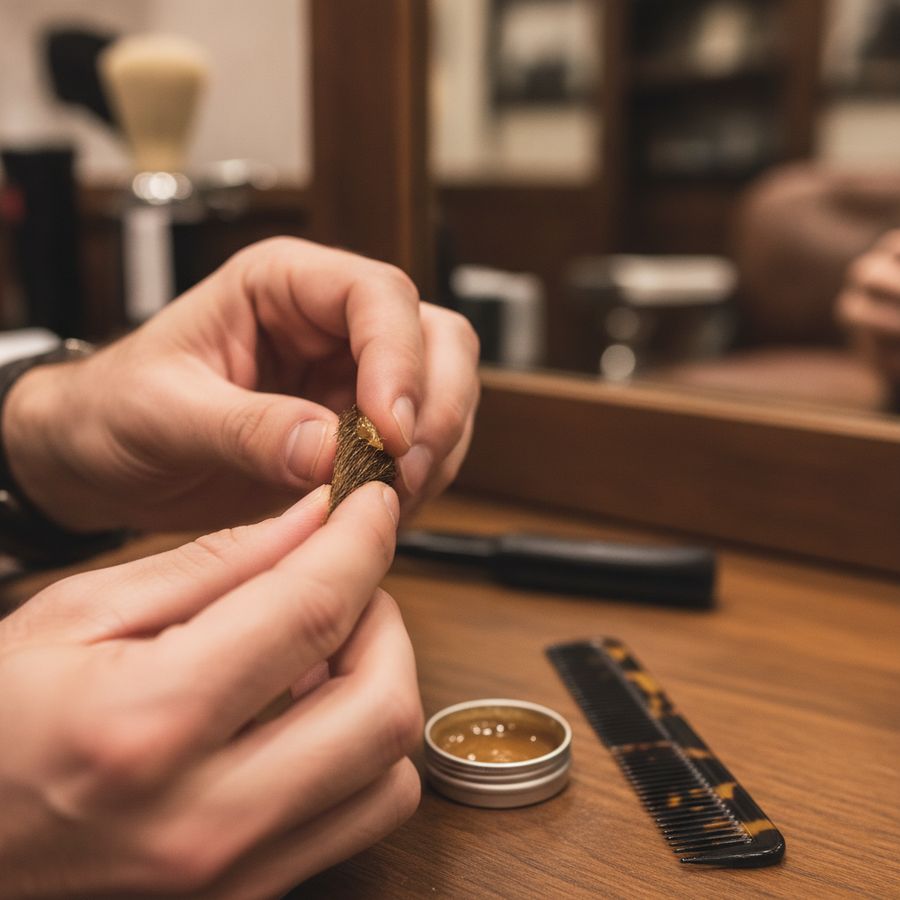
The simplest method is to scrape out a pea-sized amount with the back of your thumbnail, then rub it firmly between your thumb and forefinger. Keep working it until it turns softer, smoother, and slightly transparent. If the wax is especially hard, warming the tin in your pocket for a few minutes or using gentle heat from a hair dryer nearby can help. You do not want it melted into liquid; you just want it pliable enough for even mustache styling.
Be careful with too much heat. Overheating can make wax greasy, reduce control, and cause it to slide rather than hold.
Properly warmed mustache wax should feel workable and smooth, not runny, sticky, or rock hard
A quick warming routine looks like this:
-
Scrape a small amount from the tin
-
Rub it between fingers for 10 to 20 seconds
-
Add gentle external warmth only if needed
-
Test the texture before applying to hair
-
Work in small batches instead of one large scoop
Once you get this step right, learning how to use mustache wax becomes much easier because the product moves with your hands instead of fighting against them.
Picking hold levels for your style
Choosing the right hold level is one of the biggest factors in successful mustache styling. A medium hold wax is often enough for natural shaping, light training, and everyday control. It keeps stray hairs from dropping over the lip without making the mustache feel too rigid. For many people, that is the best place to start while learning how to use mustache wax.
A firmer or strong hold mustache wax makes more sense when you want pronounced curls, sharper ends, or all-day structure in humid or windy conditions. It is also useful for coarse or stubborn hair that does not stay in place with lighter products. The tradeoff is that stronger wax usually demands better technique: proper warming, small amounts, and careful distribution. Otherwise, it can feel heavy or look overdone.
Your style goal should guide your choice more than trends or labels. A relaxed chevron does not need the same product strength as a sculpted handlebar.
The best mustache wax is not always the strongest one — it is the one that matches your hair type, routine, and preferred finish
Use this simple guide when choosing:
-
Light to medium hold: natural styles, touchable finish, beginner friendly
-
Medium to firm hold: daily control for thicker mustaches
-
Strong hold: sharp styling, curls, longer wear, stubborn hairs
It is also smart to keep more than one option on hand. Many experienced users prefer a softer wax for weekday grooming and a stronger wax for events or long days out. That flexibility helps you keep your look polished without forcing one product to do every job.
Applying wax evenly from center outward
When applying mustache wax, the center of the mustache should always be your starting point. That area usually sits right above the lip, where hairs are densest and most likely to fall into your mouth. Beginning there gives you immediate control, then lets you spread the remaining product outward toward each side. This technique prevents heavy buildup at the tips and creates a cleaner overall shape.
After warming the wax between your fingers, pinch the center section lightly and work the product in using short outward motions. Then move from the philtrum toward the corners of the mouth, following the natural direction of hair growth. Use your fingers first, then refine with a pocket comb or mustache comb. A comb helps separate hairs, spread product more evenly, and reduce the chance of clumps.
For curled styles, do not twist the ends too early. First distribute the wax through the full mustache, then go back and define the tips last. That sequence gives more consistent hold and better balance from side to side.
Apply less than you think you need, distribute it thoroughly, and only then decide whether a second layer is necessary
A reliable application order is:
-
Warm a small amount until smooth
-
Press it into the center above the lip
-
Work outward toward each side evenly
-
Comb through to remove excess and align hairs
-
Finish the ends only after the full mustache is coated
This simple method makes how to use mustache wax far less frustrating and helps even a firm wax deliver strong hold without visible clumps.
Removing buildup without pulling out hairs
At the end of the day, removing wax properly is just as important as applying it well. If you rush this step, dried product can catch on hairs, cause unnecessary tugging, and make your mustache feel rough over time. That is why many grooming routines benefit from a dedicated mustache wax remover, especially when using heavier or high-hold waxes regularly.
The key is to break down the buildup before you comb or wash aggressively. Start by softening the mustache with warm water or a warm damp cloth. Then massage in a small amount of remover, beard wash, or a gentle oil-based cleanser. Let it sit briefly so the wax loosens from the hair shaft. Once the product starts to dissolve, use your fingertips to work it free rather than yanking it out with a comb.
If needed, follow with a mild wash and conditioner to leave the hair softer and easier to restyle the next day. This matters even more for men with longer mustaches, since repeated pulling can lead to breakage and uneven growth.
A good mustache wax remover should loosen residue so the wax slides away instead of forcing hairs to come with it
For smoother removal:
-
Use warmth first to soften hardened wax
-
Massage in remover or cleanser before combing
-
Detangle gently from the center outward
-
Wash only after the buildup has broken down
-
Finish with a light conditioning step if the hair feels dry
A careful removal routine keeps your mustache healthier, makes tomorrow’s mustache styling easier, and prevents the cycle of buildup that often causes clumps in the first place.
Fixing common mustache wax application errors
Most wax issues stem from a few common mistakes, but the good news is they’re simple to fix. If your mustache wax looks clumpy, it likely means you used too much product or didn’t warm it enough. If the hold fades too quickly, you might have applied too little or chosen a formula that’s too soft for your hair type. A greasy mustache can indicate that the wax was overheated or applied to damp hair.
Another frequent problem is styling too aggressively before the product is evenly distributed. Twisting the ends right away can result in an undercoated middle and overloaded tips, leading to an uneven shape. Effective mustache styling requires patience: warm the wax, apply lightly, distribute, comb, and then shape.
When issues arise, resist the temptation to keep adding more wax; often, a comb and a bit of finger heat can reset the product you’ve already used.
If your wax is giving you trouble, the solution is usually better distribution, not more product.
Here are some quick fixes for the most common errors:
-
Clumps: warm the wax more and apply less
-
Flakes: start with cleaner, drier hair and soften the product properly
-
Weak hold: switch to a firmer or strong-hold mustache wax
-
Uneven shape: comb through before shaping the ends
-
Painful removal: use a proper mustache wax remover instead of pulling the product out dry
Once you resolve these basics, mastering how to use mustache wax becomes easier, and your styling routine will be faster, cleaner, and much more reliable.